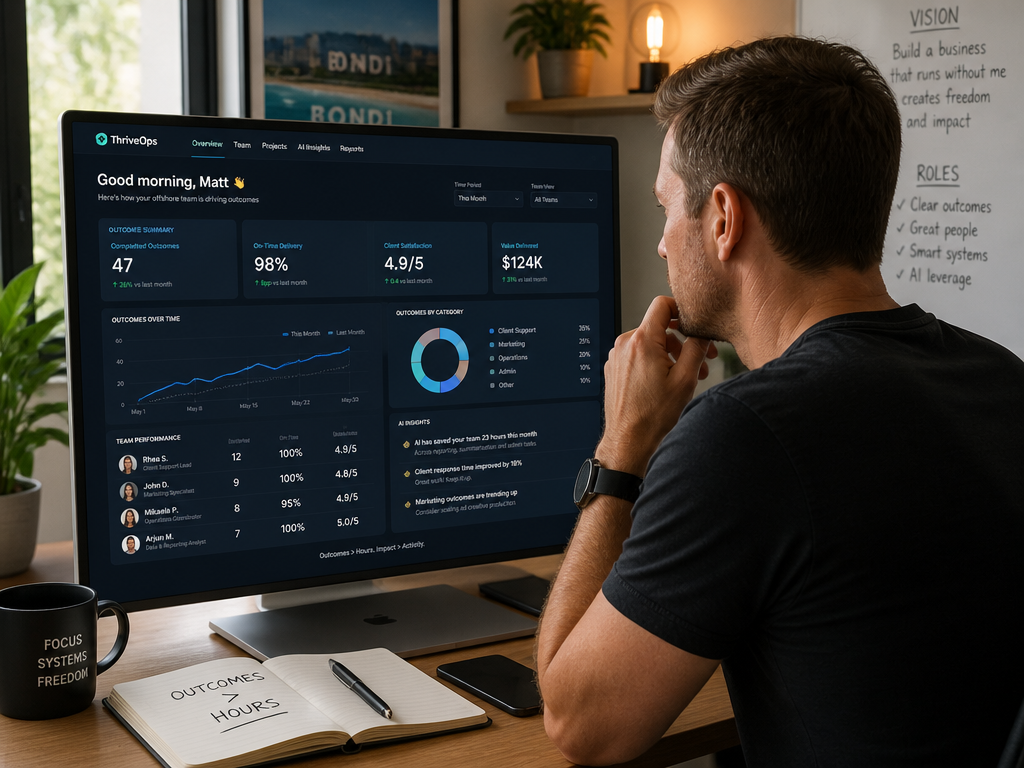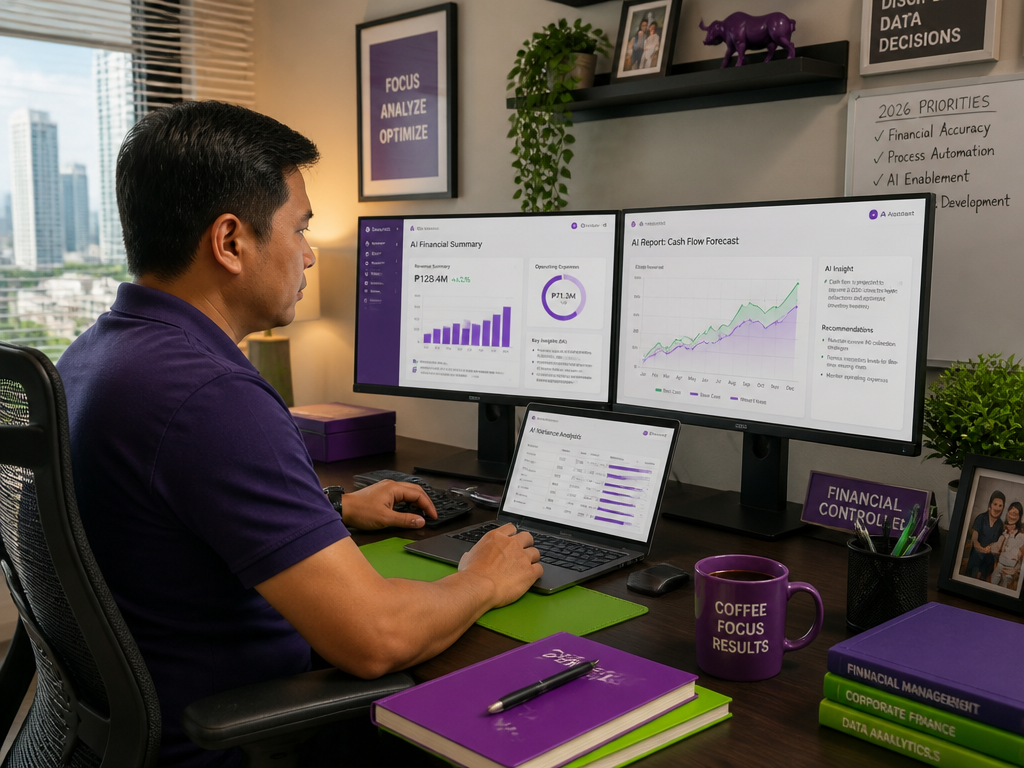
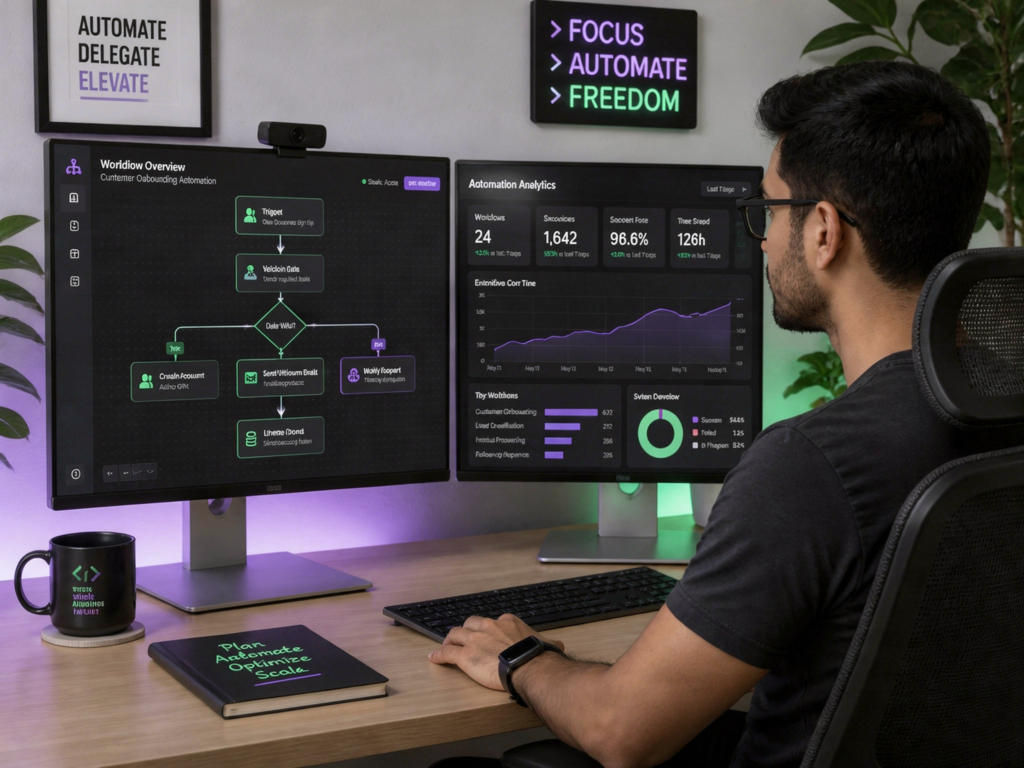
The narrative around artificial intelligence is dominated by a single, pervasive fear: AI is coming for our jobs. As we navigate the business landscape of 2026, it’s worth looking at the reality honestly. Did AI cause unemployment? Yes. Certain routine, highly manual roles have been rendered obsolete.
But AI didn’t trigger the mass, permanent unemployment many predicted. It triggered a turbulent reallocation of opportunity. For every manual task automated out of existence, a new system-driven role was born.
The numbers bear this out. The World Economic Forum’s Future of Jobs Report 2025 projects 170 million new jobs created and 92 million displaced globally by 2030, a net increase of 78 million jobs. AI didn’t just replace jobs — it destroyed outdated ones, created higher-value ones, and changed who is qualified to win them.
Nowhere is this shift more visible than in the global talent pool. For Australian businesses outsourcing roles to offshore hubs, the paradigm has flipped. The most sought-after talent today isn’t the cheapest worker doing repetitive tasks — it’s the AI-fluent professional. Here is a candid look at the reality of displacement, the creation of new roles, and why hiring for AI fluency is now the ultimate competitive advantage for Australian SMEs.
Key Takeaways
- The reality of displacement: Manual data entry and basic administrative roles have declined sharply, with 39% of existing skill sets expected to become outdated between 2025 and 2030.
- The creation of new ecosystems: AI generated entirely new offshore job categories — AI Workflow Managers, Automated QA Specialists, Customer Sentiment Orchestrators, and Prompt Engineers.
- The rise of AI fluency: The most valuable offshore talent in 2026 pivoted from “task executors” to “system operators.” Roles requiring prompt engineering skills grew 3x between 2024 and 2026.
- The Australian advantage: Businesses leveraging AI-adapted global teams achieve enterprise-level output without enterprise-level headcount.
What Is “AI-Fluent” Offshore Talent?
AI-fluent offshore talent refers to professionals who operate, refine, and oversee AI systems — rather than competing with them on manual tasks. These workers act as the “human-in-the-loop”: they design prompts, audit outputs, manage automated workflows, and apply cultural and brand judgement that AI cannot.
This is the workforce category that is growing fastest. 85% of employers now plan to prioritise workforce upskilling, and 63% identify skills gaps as the primary barrier to business transformation.
The Hard Truth: Job Displacement vs. Job Creation
It’s important to acknowledge the disruption. Offshore teams who relied entirely on basic transcription, low-complexity copy-pasting, or simple internet research have faced significant unemployment. When an AI can do in seconds what once took hours, businesses naturally stop paying for those hours.
But the integration of AI created a massive infrastructure gap. These advanced systems still need human oversight, contextual training, and strategic deployment. By 2030, AI and information processing technologies will transform 86% of businesses and every one of those transformations requires people who can run the new systems.
The jobs didn’t vanish; they evolved. A virtual assistant whose job was once to manually scrape leads has been displaced. A new role, an AI Operations Specialist who oversees an automated lead-generation agent and refines its targeting parameters for Australian market nuances has taken its place. The baseline has simply been raised.
How AI-Fluent Offshore Talent Adapted in 2026
The offshore professionals winning the highest-paying, most secure roles in 2026 ran toward the technology rather than hiding from it. They recognised that while certain tasks were dead, human judgement was more valuable than ever.
- From creators to editors. In graphic design, software development, and content creation, the best offshore talent adapted by mastering the art of critique. They use AI to generate volume, then apply human judgement, cultural nuance, and brand understanding to refine output for the Australian market.
- Mastering prompt engineering. Prompt engineering became a fundamental operational skill. LinkedIn data showed a 250% increase in job postings for prompt engineering roles in a single year, and the discipline now sits at the core of every AI-integrated offshore team.
- System troubleshooting over manual labour. Instead of manually inputting data, adapted offshore talent now manages the AI systems that handle the data — monitoring for hallucinations, enforcing data security protocols, and optimising automated workflows.
The New Competitive Edge for Australian Businesses
For Australian business leaders, this evolution changes the maths of hiring. If you are still using an offshore team to manually grind through tasks the way they did in 2022, you are falling behind and overpaying.
The companies dominating their sectors today are aggressively seeking out AI-fluent global talent to fill these newly created roles. By hiring an offshore professional who acts as a human-in-the-loop for AI operations, an Australian SME can output the volume of a much larger corporation while maintaining a lean, agile payroll.
This isn’t theoretical positioning — it’s a structural shift. A WEF survey of 1,000 companies across 22 industries and 55 economies confirms that 86% of businesses expect AI-driven transformation by 2030. Australian SMEs that hire ahead of this curve gain a multi-year head start; those that hire behind it pay a compounding tax on lost output.
The Shifting Landscape: Jobs Lost vs. Jobs Created
| The Obsolete Role (Declining Demand) | The Newly Created Role (Surging Demand) | Primary Responsibility Shift |
| Manual Data Entry Clerk | AI Data Integrity Specialist | From typing data to auditing AI-processed data for accuracy |
| Basic Tier-1 Support Agent | Customer Sentiment Orchestrator | From reading scripts to managing AI responses and handling high-empathy escalations |
| Junior Copywriter | AI Content Editor & Localiser | From writing basic drafts to refining AI generations for Australian cultural nuance |
| Basic Research Assistant | AI Workflow Manager | From manual research to building automated research pipelines via AI agents |
| Manual QA Tester | Automated QA & Prompt Specialist | From repetitive testing to designing prompt frameworks and validating AI output quality |
What This Means for Australian Hiring Managers
Three practical takeaways if you’re building or restructuring an offshore team this quarter:
- Stop hiring for tasks. Start hiring for systems. A job description that lists “data entry, scheduling, basic research” is already obsolete. Rewrite it around “managing the AI workflow that handles data entry, scheduling, and research.”
- Test for AI fluency in interviews. Ask candidates to walk you through a prompt they wrote, a hallucination they caught, or a workflow they automated. If they can’t, they aren’t ready for 2026.
- Invest in tooling, not just headcount. A single AI-fluent operator with the right stack can outperform three traditional workers. Budget accordingly.
Frequently Asked Questions
Yes, partially. Workers whose entire skill set was tied to highly repetitive, predictable, and manual tasks faced significant displacement. However, this was simultaneously offset by a sharp surge in demand for workers who could operate, manage, and refine AI systems. The WEF projects a net global gain of 78 million jobs by 2030, even after accounting for AI-driven displacement.
AI created a “human-in-the-loop” economy. New roles include AI QA testers, prompt engineers, automated workflow managers, AI data security auditors, and localised AI editors. AI executes the raw output; these new roles refine, audit, and direct it.
Australian businesses face high domestic overhead and a documented skills shortage across nearly a third of all assessed occupations. By hiring an AI-adapted offshore worker, an Australian business gains strategic output that previously required several traditional employees — drastically lowering cost per deliverable while accelerating time-to-market.
Yes, and many already have. The professionals thriving in 2026 are those who are actively upskilled — using the very AI tools that threatened their old jobs to learn how to do their new ones. Reputable offshore providers now run dedicated AI fluency programs for their workforce.
The four most-requested roles in 2026 are: AI Content Editors (refining generated content for AU audiences), Workflow Automation Managers (running RAG and agentic systems), Customer Experience Orchestrators (managing AI-assisted support), and Data Integrity Specialists (auditing AI-processed datasets).
Look for three signals: documented AI training programs, candidate portfolios showing real prompt engineering and workflow work, and case studies with measurable output gains (not just generic “we use AI” claims). If a provider can’t produce these, they’re selling 2022 labour at 2026 prices.
Scale Smarter With Hyvid
The rules of global hiring have changed. To win in today’s hyper-competitive landscape, you don’t just need offshore staff — you need the specialised, AI-empowered operators who fill the roles of the future.
At Hyvid.com, we don’t source legacy talent for obsolete roles. We rigorously vet and connect Australian businesses with AI-fluent global professionals who have successfully adapted to the new economy. Whether you need an AI-assisted development team, an automated marketing squad, or next-generation operational support, we provide talent that knows how to harness today’s technology — and tomorrow’s.
Book a 30-minute strategic consultation and we’ll audit your current offshore setup, identify where AI-fluent talent would deliver the biggest output lift, and show you exactly what a modern team structure looks like for a business your size.