
Quick answer: Start AI upskilling with three foundations: AI literacy (what the tools can and cannot do), prompting (how to instruct them clearly) and workflow integration (where AI fits in each process). The gap this closes is real: BCG’s AI at Work research found barely a third of employees feel properly trained, and even among regular AI users nearly one in five has received no training at all.
That gap is also the opportunity. Training is one of the few AI investments with a measured dose-response effect: in the same BCG study, 79% of people who received more than five hours of training became regular AI users, against 67% of those who got less. Five hours. Most teams never get them, which is why the teams that do pull so far ahead.
This guide covers the three foundations in order, what to deliberately skip, and a 30-day sequence an SME can run without a training budget.
What is AI literacy?
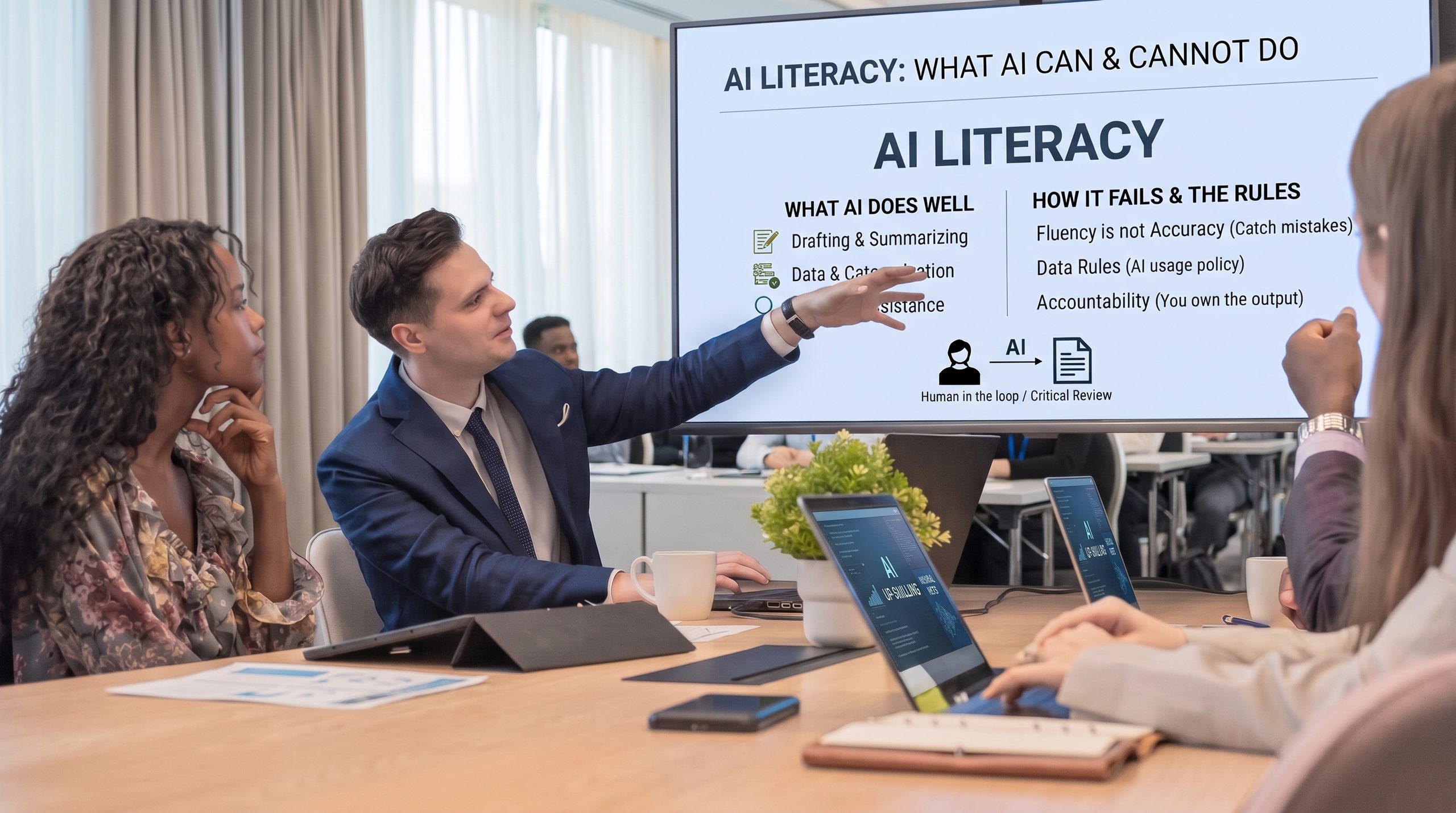
AI literacy is a working understanding of what AI tools can and cannot do: where they are reliable, where they fail, and what that means for how you use them. It is the foundation everything else sits on, and it takes hours to build, not weeks.
Practical AI literacy for a working team covers four things:
- What the tools do well: drafting, summarising, structured data work, categorisation, research assistance
- How they fail: confident, plausible errors; invented details; misread figures. Fluency is not accuracy
- Data rules: what may and may never be entered into which tools, per your AI usage policy
- Accountability: the person who uses the output owns the output, which is why review is part of the job rather than an insult to the tool.
A team member with this grounding uses AI confidently and catches its mistakes. A team member without it either avoids the tools or trusts them blindly, and the second failure is more expensive than the first.
Should everyone learn prompt engineering?
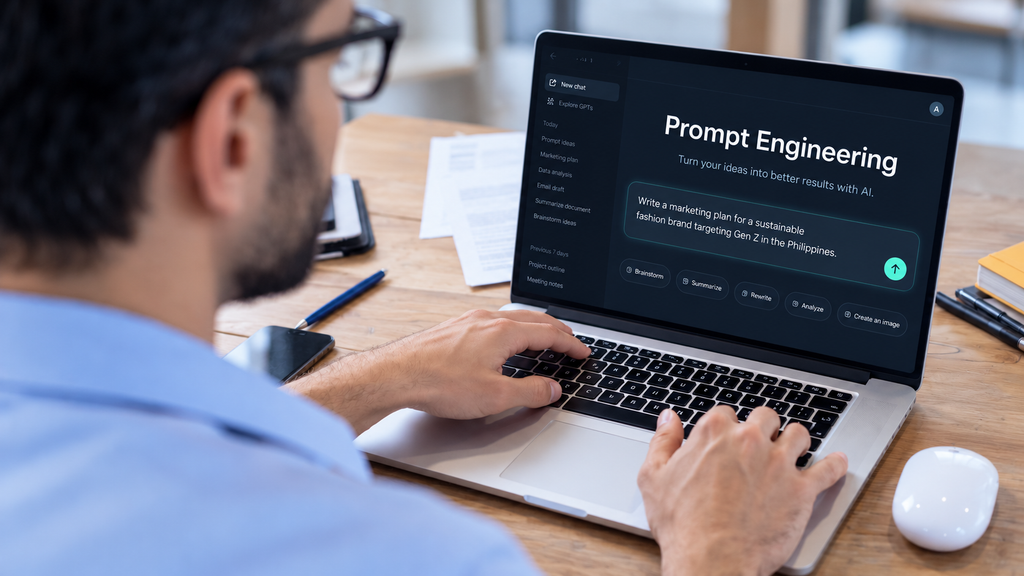
No. Everyone should learn practical prompting, which is a day-one skill; formal prompt engineering is a specialist discipline most SME teams do not need.
The distinction matters because ‘prompt engineering’ courses are where most training budgets go to die. What a working team actually needs is the ability to give an AI tool the same quality of instruction they would give a capable new starter: context, the task, the format wanted, and an example of good output. That is teachable in a half-day workshop and improves with use.
What to skip, at least at the start: model internals and jargon-heavy theory, tool tourism (sampling every new AI product rather than going deep on the approved stack), advanced prompt-chaining techniques, and anything pitched as certification for its own sake. None of it moves output in the first quarter, and all of it consumes the five hours that do.
Where does workflow integration come in?
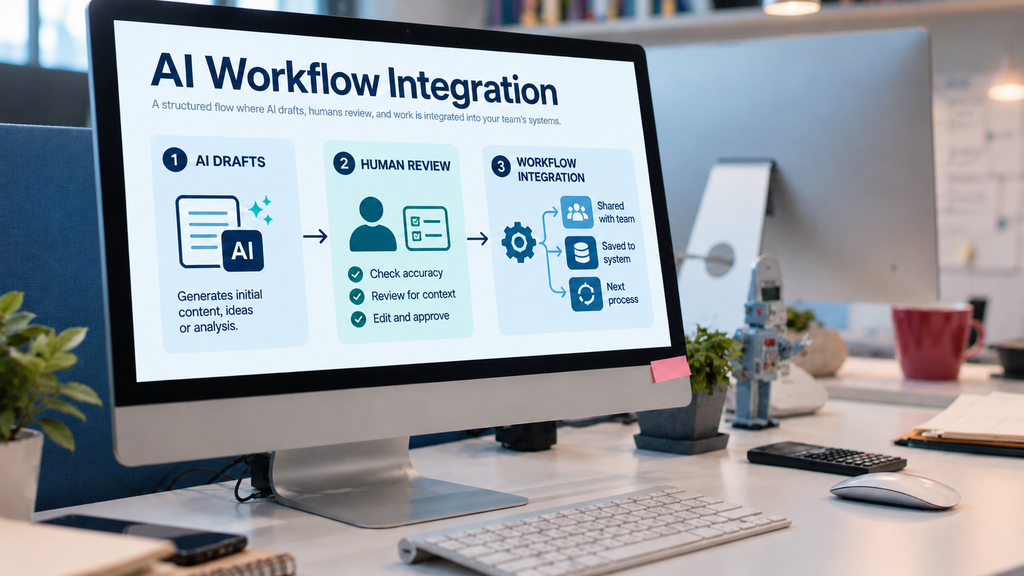
Workflow integration is the third foundation and the one that separates trained teams from transformed ones: deciding, per process, where AI drafts, where a person reviews, and where the handoffs sit.
Literacy and prompting make individuals faster. Integration is what makes the business faster, because the gains compound only when they are built into how work actually flows. This is also BCG’s headline finding: introducing tools into existing ways of working is not enough; real value arrives when workflows are reshaped around the new division of labour. In practice that means taking one process, mapping which steps AI now absorbs, and rebuilding the team member’s role around review, exceptions and improvement, the human-in-the-loop structure covered in our quality guide.
How long does AI upskilling take?

A team reaches working competence in about 30 days, with measurable output changes typically inside the first fortnight. Here is a sequence an SME can run with nothing but the approved tools and a weekly hour:
| Phase | Focus | What happens |
|---|---|---|
| Days 1-5 | AI literacy | A half-day session: capabilities, failure modes, data rules, accountability. Everyone signs the AI usage policy and gets access to the approved tools |
| Days 6-10 | Practical prompting | Hands-on workshop using real work: each person brings one recurring task and leaves with a working prompt and template for it |
| Days 11-20 | Workflow integration | Each team member runs one real workflow with AI drafting and human review; daily 15-minute standup to share what worked and what broke |
| Days 21-30 | Embed and measure | Prompts and templates saved to a shared library; baseline metrics captured (cycle time, volume, rework) so improvement is visible from month two |
Two conditions decide whether the 30 days stick. The first is leadership visibility: BCG found that strong, visible leader support lifts employee positivity about AI from 15% to 55%, yet only about a quarter of frontline employees currently get that support. The second is follow-through on the five-hour threshold: training that stops at a single lunch-and-learn lands on the wrong side of the dose-response line.
What this means for your team
The order is the strategy: literacy first so people trust their own judgement, prompting second so instructions improve, integration third so the gains reach the business. Skip the theory, skip the tool tourism, protect the five hours.
It is also the sequence Hyvid runs before a team member ever reaches a client, which is why every Hyvid professional arrives AI-trained on day one rather than learning on your time. If you would rather start with the training already done, ask about Hyvid’s AI-trained talent.
Frequently asked questions
AI literacy, then practical prompting, then workflow integration, in that order. Literacy prevents expensive mistakes, prompting raises output quality, and integration turns individual speed into business results.
A working understanding of what AI tools can and cannot do: their strengths, their failure modes, the data rules that govern them and who owns the output. It is the prerequisite for everything else.
Everyone should learn practical prompting, which takes a half-day and improves with use. Formal prompt engineering as a discipline is a specialist skill most SME teams can skip entirely.
About 30 days to working competence using the sequence above, with the first measurable output changes typically inside two weeks. The research threshold worth remembering is five hours of structured training.
Only partially. Trained individuals get faster, but the compounding gains arrive when processes are redesigned so AI drafts and people review, which is why workflow integration is a foundation rather than an optional extra.