A note on why this page exists. The National AI Centre’s 2026 research found that around 65% of businesses not adopting AI cite distrust of AI decision-making or a preference to keep human control, making trust, not cost or capability, the biggest barrier to adoption.
Those instincts are reasonable. The answer to them is not reassurance; it is structure. Each answer below names the specific safeguard that addresses the concern.
1. Is combining AI with offshore staffing safe for my business?

Yes, when three structures are in place: human review before any AI output leaves the team, an enforced AI usage policy defining approved tools and data rules, and a provider operating certified secure environments. Without those structures, it carries real risk. The safety is in the setup, not the technology.
The practical test for any provider is whether they can show you all three in writing: the workflow diagram with human checkpoints, the AI usage policy team members sign, and the security certifications for the environment they work in. A provider who answers with adjectives instead of documents has answered the question.
2. Will AI-generated work be low quality?
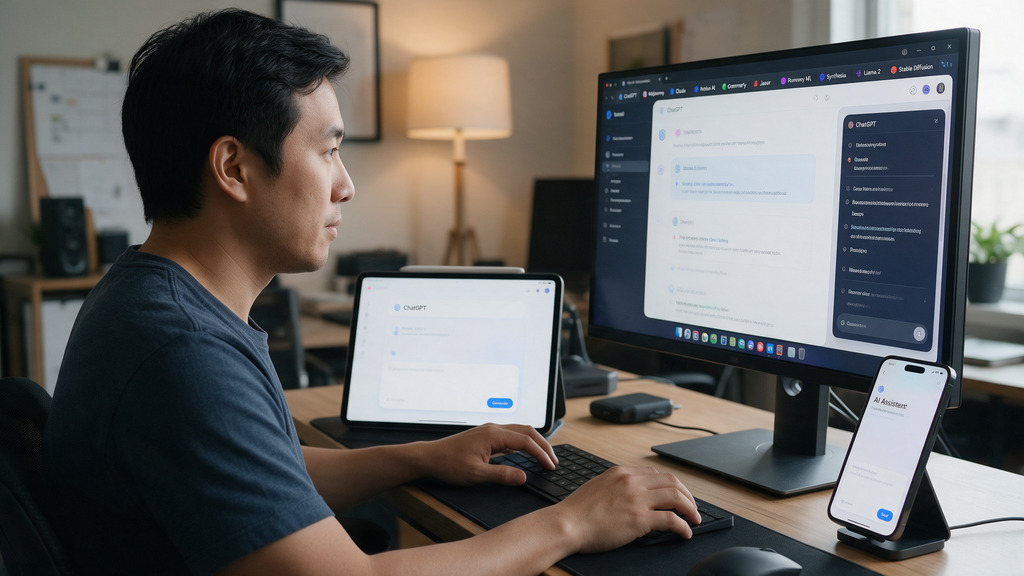
Unreviewed AI output can be. That is exactly why AI-augmented teams are structured so no AI draft reaches you or your customers without a trained person reviewing, correcting and approving it. Quality is owned by a named team member; AI just gets them to a strong first version faster.
The quality risk with AI is not that it produces uniformly bad work; it is that it produces confident work that is occasionally wrong. Human-in-the-loop design treats every AI output as a draft. Over time quality typically rises above pre-AI baselines, because the team member spends their time on review and refinement rather than production, and errors get caught at a defined checkpoint rather than downstream.
3. Who is responsible if AI makes a mistake?
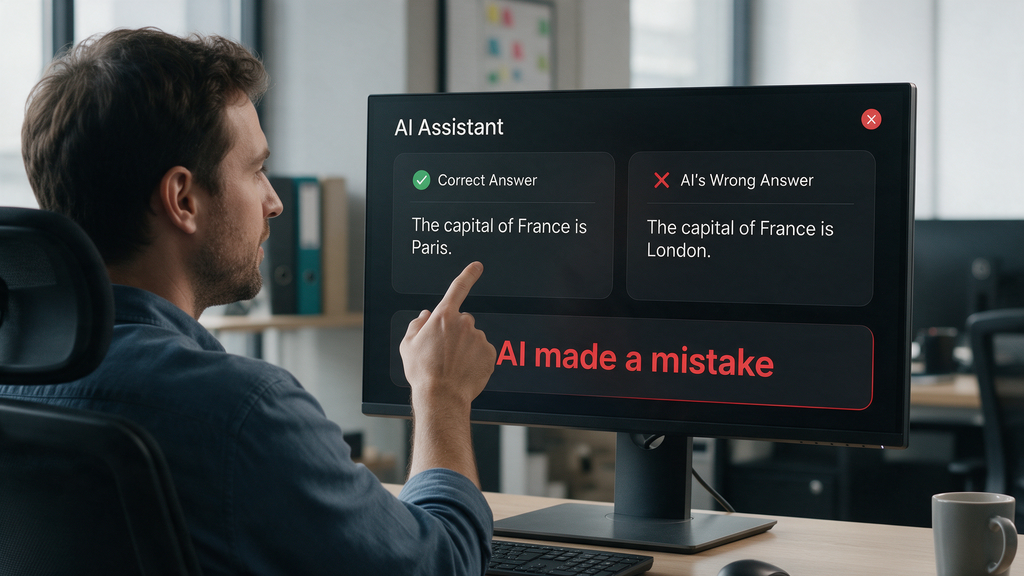
A named person, always. In a properly structured team, every output has a human owner who reviewed and approved it before it shipped. ‘The AI did it’ is never the answer, contractually or operationally. If your provider cannot tell you who owns each output, that is the red flag.
This mirrors how Australian regulators approach the question: accountability for decisions and outputs sits with the business and its people, regardless of what tools produced them. The federal government’s AI adoption guidance is built on the same principle of human accountability for AI-assisted outcomes. Structure your offshore team the same way and the responsibility question has a clean answer.
4. Is my client data safe with an offshore team using AI?

It is safe when three layers hold: a certified secure environment such as ISO 27001, legal coverage under both the Philippine Data Privacy Act and your Australian Privacy Act obligations, and an AI policy that bans entering client data into unapproved public tools. Ask for evidence of each layer.
The Philippines has a mature data protection regime. The Data Privacy Act of 2012, enforced by the National Privacy Commission, imposes obligations broadly aligned with international standards, which is one reason the country processes sensitive work for banks, insurers and healthcare providers globally. Your contract should also address your obligations under the Australian Privacy Act and any industry rules that follow your data offshore.
The biggest practical risk is not the offshore location. It is unmanaged AI use anywhere, including your own office, where staff paste client information into consumer tools with no policy in place.
5. Will my customers know AI is involved?

Only if you choose to tell them, because in this model AI never interacts with your customers directly. Your team members do the communicating; AI helps them prepare. What customers experience is faster, more consistent service from a person, not a bot.
Disclosure is ultimately a brand decision. Some businesses state that they use AI-assisted workflows as a mark of efficiency; others simply deliver the improved service. Either is defensible when a human owns every customer interaction. What is not defensible is unsupervised AI communicating with customers in your name, which is precisely what human-in-the-loop structure prevents.
6. Will the offshore team use AI tools I have not approved?

Not under a proper AI usage policy. The policy names the approved tools, the banned tools, and the data that may never leave your environment, and team members sign it as a condition of the role. Combined with managed devices and monitored environments, unapproved tool use becomes an enforceable breach, not a hope.
Compare that with the unmanaged alternative: surveys consistently show a majority of workers already use self-selected AI tools at work without policies. A structured offshore arrangement is often more governed on this point than the average Australian office.
7. What stops AI from inventing facts in my documents?

Workflow design. AI drafting is confined to tasks where outputs are verifiable, every factual claim is checked against source data by the reviewing team member, and high-stakes documents get a second review. Hallucination is a known failure mode, so the process assumes it will happen and catches it.
This is the difference between using AI and being used by it. Teams trained on AI limitations know that fluency is not accuracy, and their review step exists precisely for the plausible-sounding error. Ask any prospective provider how their review process specifically handles fabricated details; a good one will describe verification against source documents, not vibes.
8. Who owns the work product, and is my IP protected?
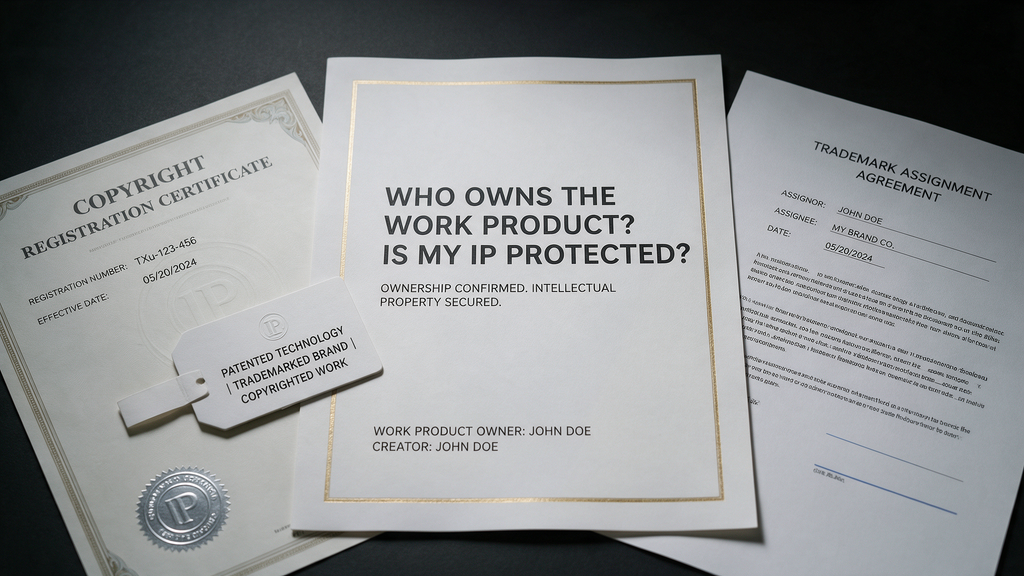
You do, and it should say so in the contract. Work created by your dedicated team members belongs to your business, with confidentiality and IP assignment clauses covering both the people and the provider. AI involvement does not change ownership of work your team produces in your workflows.
Two additions worth negotiating: a clause confirming your data and documents are never used to train third-party AI models, and confirmation that approved AI tools are configured on enterprise terms, which typically exclude training on your inputs, rather than free consumer tiers.
9. How do I maintain oversight of a team I cannot see?

The same way you oversee any remote team: defined outputs, visible workflows and regular communication, with the added structure of documented processes and quality checkpoints. Dedicated offshore team members work in your systems during your hours, so their work is as visible as any local remote employee’s.
In practice most clients find oversight improves, because the offshore model forces the process documentation and output definitions that local teams often run without.
10. What happens if it goes wrong?
A reputable provider carries replacement guarantees for people, contractual remedies for security or policy breaches, and clean exit terms including return and deletion of your data. Get all three in writing before you start, and treat any reluctance to provide them as your answer.
Risk in this model is managed the same way as any supplier relationship: contractually, with evidence, up front.
What this means when you choose a partner
The ten questions on this page double as a due diligence checklist. A provider comfortable answering all ten in writing is telling you something; so is one who is not.
Every safeguard described here exists in writing at Hyvid: the human-in-the-loop workflow design, the signed AI usage policy, the certified environments and the contractual protections. If you want to see how they would apply to your business, talk to us about safeguards.